
Meet Les Timbey
A Lifetime Standing Up for Working People
From his roots in County Durham’s mining communities to decades spent representing workers and residents, Les Timbey has dedicated much of his life to public service.
Now, as Labour’s candidate for Craghead and South Moor, he talks about the experiences that shaped him, the communities he calls home and why retirement hasn’t diminished his determination to make a difference.
For Les, politics has never been about titles or recognition. It’s about people, community and making sure nobody feels forgotten.
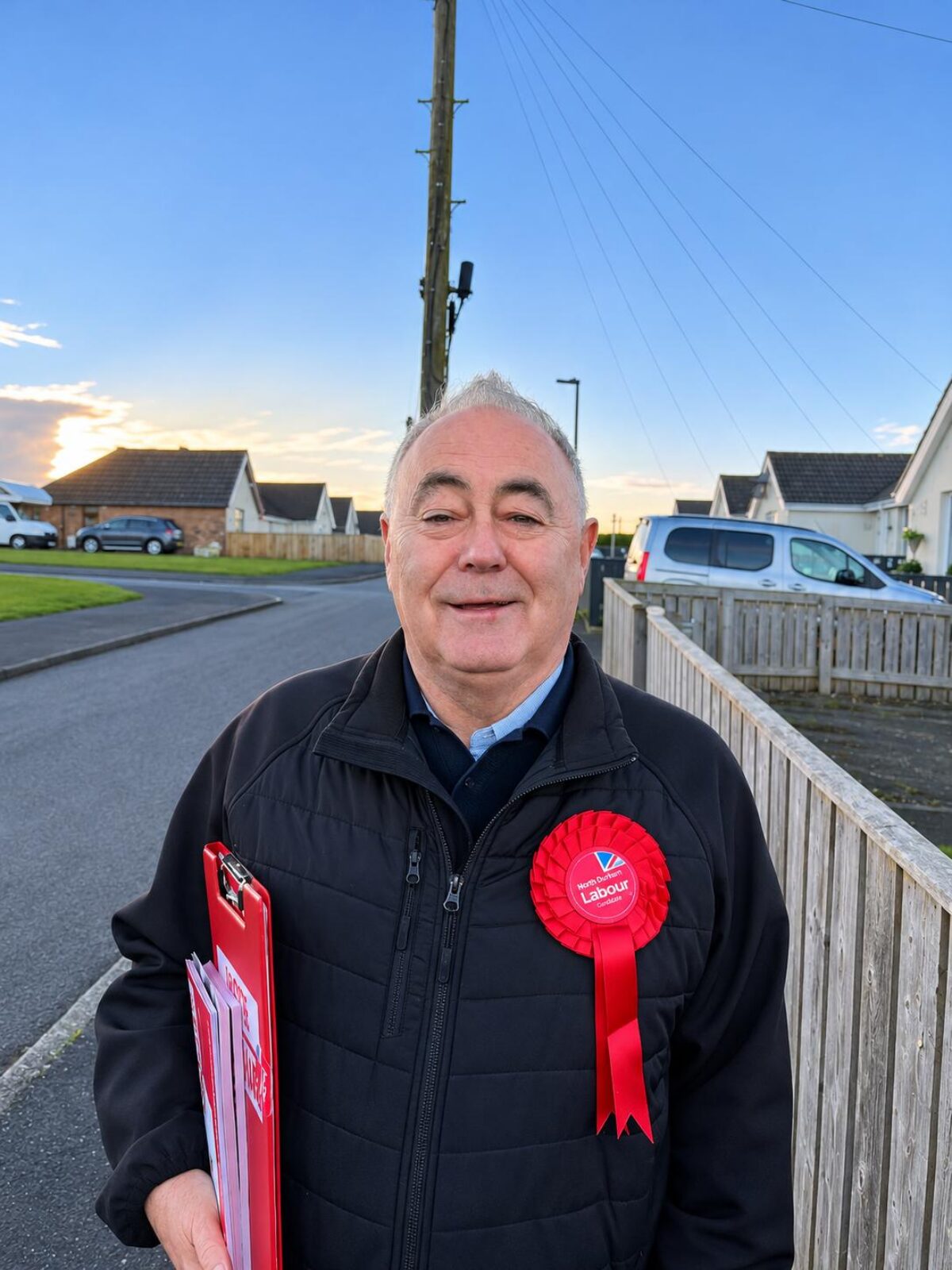
A Life Shaped by Community
For Les Timbey, the values that have guided his life began long before he entered local politics.
Born and raised in Burnopfield, Les grew up in a mining family where hard work, solidarity and looking after your neighbours were part of everyday life.
His father worked down the pits, and the experiences of mining communities across County Durham helped shape his understanding of fairness, community and the importance of standing together.
Those values have stayed with him throughout his career.
Les has now lived in the local area for more than 20 years, raising his family here and developing an enduring connection to the communities he calls home.
For him, the area’s greatest strength has always been its people.
“They are friendly, and they will be open and honest in telling you what they think.”
It’s that openness, he believes, that makes conversations with residents so important.
Standing Up for Working People
Long before he entered local politics, Les Timbey was already standing up for working people.
During his 26-year career at Durham County Council, he spent more than two decades as a GMB trade union representative, supporting colleagues, championing fairness and ensuring workers had a voice.
His commitment to the trade union movement was deeply personal.
Growing up in a mining family, Les witnessed the impact of industrial decline on communities across the North East. He remembers the miners’ strikes, the picket lines and the uncertainty faced by families whose livelihoods depended on traditional industries.
These weren’t simply newspaper headlines. They were the experiences of neighbours, friends and entire communities.
One of the proudest moments of his trade union career came when he attended his first GMB Congress.
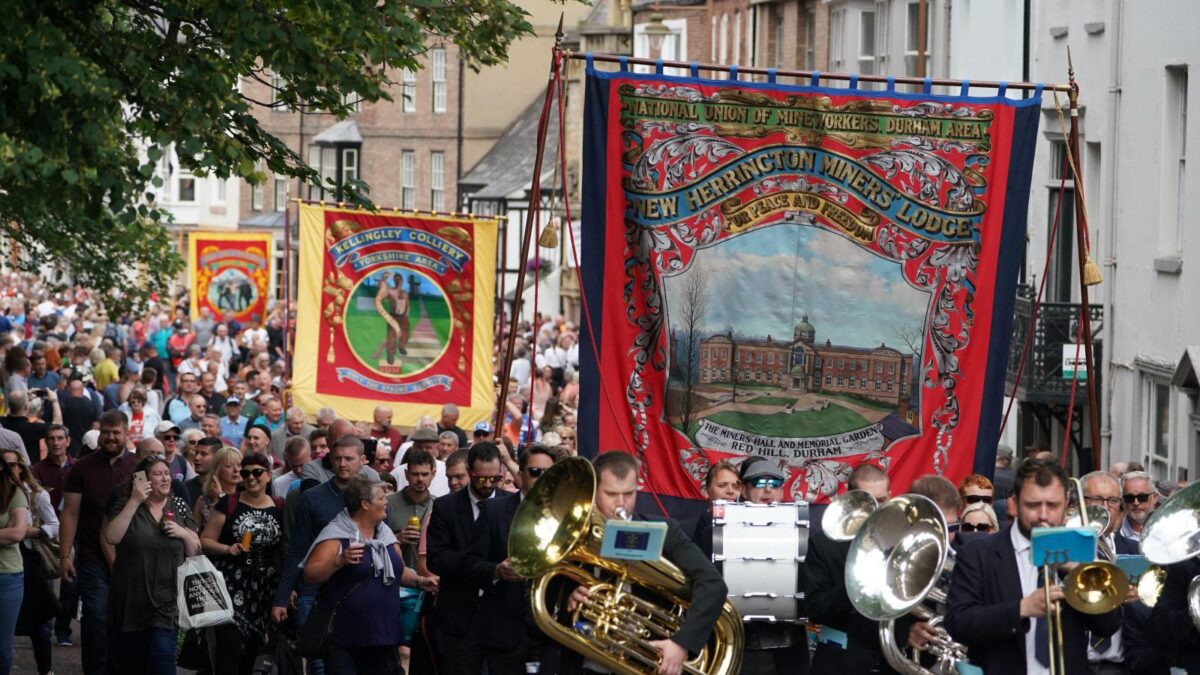
Les spoke in support of a motion calling on the union to back the Durham Miners’ Gala and provide financial assistance to help secure its future.
For someone whose family history is so closely connected to County Durham’s mining heritage, it was an opportunity to stand up for something that represented generations of working people.
The Gala is more than an annual event. It is a celebration of the solidarity, identity and shared history of the communities that helped build County Durham.
Les’s commitment to protecting working people also extended to their retirement.
He has served on the GMB’s Local Government Pension Scheme steering group for more than ten years, including as chair, and spent a decade on Durham County Council’s Pension Committee.
Those experiences reinforced his belief that people who dedicate their working lives to public service deserve dignity and financial security in retirement.
Eight Years of Community Service
For Les Timbey, moving from trade union representation into local politics was a natural progression.
After years spent supporting colleagues, challenging unfairness and standing up for working people, he wanted to bring those same values into the communities he called home.
For the past eight years, Les has served on Stanley Town Council, including a period as Leader during one of the most challenging moments in recent history: the COVID-19 pandemic.
As families faced isolation, vulnerable residents needed additional support and community organisations struggled with unprecedented pressures, local government had an important role to play.
Under Les’s leadership, Stanley Town Council worked to direct resources towards communities, provide financial assistance to local organisations and support practical measures to help residents through the crisis.
For Les, it was a reminder that public service is about more than meetings, committees and council chambers. It’s about being there when people need help.
Another experience that stands out was the proposed redevelopment of the former Greenland School.
Plans had been brought forward to convert the building into a large house in multiple occupation, prompting concerns from local residents.
Les and fellow representatives listened to those concerns, engaged with the proposals and challenged the development. The application was subsequently withdrawn.
It was an example of the kind of local representation Les believes in: understanding residents’ concerns and making sure their voices are heard.
As he puts it:
“Residents should feel comfortable coming to you with their concerns, knowing that you’ll take the time to understand their situation and do what you can to help.”
For Les, that principle has remained constant throughout his time in public service. Whether representing workers through the GMB or residents on Stanley Town Council, the responsibility begins with listening.
A £20 Million Opportunity for Our Communities
For Les, looking towards the future means recognising both the challenges facing local communities and the opportunities to make lasting improvements.
One of the most significant is the Labour Government’s £20 million Pride in Place investment, which will provide long-term funding over ten years to support community-led improvements.
With approximately 80% of the Craghead and South Moor electoral division falling within the programme’s designated area, the investment presents an important opportunity for residents to help shape the future of their neighbourhoods.
But Les believes the most important voices in deciding local priorities should be those of the people who live there.
Whether that’s improving village halls, supporting grassroots sports clubs, creating opportunities for young people, enhancing public spaces or helping community organisations develop new activities, Les wants local people to have a meaningful say in the improvements that matter to them.
He also recognises that improvements within the designated funding area could have benefits for neighbouring communities beyond its boundaries.
For Les, the opportunity isn’t simply about spending money. It’s about making sure investment delivers lasting benefits, strengthens community pride and creates opportunities for future generations.
And he believes the people who know their communities best should be central to shaping that future.

“I don't believe a councillor should suddenly appear when an election comes around and then disappear again afterwards.” - Les Timbey
The Man Behind the Politics
Away from council meetings, community campaigns and the responsibilities of public life, there’s another side to Les Timbey.
And it might surprise a few people.
Football has always been a big part of his life. Growing up in a family of football fanatics, Les remembers the excitement of being a season ticket holder during the 1970s and travelling to Wembley at just 14 years old.
It’s a passion that has stayed with him, alongside a love of music, particularly the sounds of the 1980s.
These days, you’re just as likely to find Les enjoying an eighties music festival as attending a community meeting.
And then there are the tattoos.
Taking up an interest in tattoos in his sixties prompted some gentle teasing from his children, who jokingly suggested he was having a midlife crisis.
But for Les, getting older has never meant losing your sense of adventure, your interests or your willingness to try something new.
Despite those interests, it’s the quieter moments closer to home that mean just as much.
Ask Les about his favourite place locally, and he doesn’t hesitate to mention South Moor Memorial Park.
It’s somewhere that reflects what he values most about the area: its history, its green spaces and the importance of having places where people can come together.
For all his years in public service, Les remains someone who enjoys the simple things in life: family, football, music and the communities he calls home.
Politics Should Be About People
For Les, the most important part of being a councillor isn’t what happens inside a council chamber.
It’s what happens outside it.
It’s the conversations on doorsteps, the concerns raised by residents and the responsibility to remain accessible long after an election has finished.
He believes local representatives should be visible, approachable and willing to listen, even when the answers aren’t straightforward.
Across all of Stanley, Les recognises that communities face different challenges, but share many of the same aspirations.
People want safe streets, reliable public services, opportunities for their children and neighbourhoods they can feel proud of.
Concerns about antisocial behaviour, off-road motorbikes, drugs and neglected buildings need to be taken seriously. Les believes progress depends on working with residents, the police, local authorities and other partners rather than making promises that cannot be delivered.
But he also wants the conversation about the area’s future to be about more than its problems.
Better access to transport and healthcare, thriving local shops, stronger community facilities, support for grassroots sport and more opportunities for young people all have a part to play.
Les is particularly passionate about helping younger generations understand how decisions are made.
He would like to see more opportunities for young people to engage with local democracy, including visits to schools that explain the role of councillors and encourage an interest in civic life.
It’s not about telling young people what to think. It’s about helping them understand that their voices matter.
Throughout his career, Les has never placed much importance on titles or ceremonial recognition.
What matters to him is whether people feel they’ve been listened to, whether their concerns have been taken seriously and whether their representative has genuinely tried to make a difference.
That, he believes, is how public service should be judged.
I Will Be Here for You
After more than four decades of working life, trade union representation and community service, Les Timbey could be forgiven for wanting a quieter retirement.
But for Les, retirement from employment was never going to mean retirement from the community.
The values he learned growing up in a mining family in Burnopfield have stayed with him: solidarity, fairness, looking after your neighbours and standing up for people who need a voice.
They carried him through 26 years at Durham County Council, more than two decades representing workers through the GMB and eight years serving residents on Stanley Town Council.
And they continue to shape his approach to public life today.
When asked how he would like people to remember his contribution, Les doesn’t talk about political achievements, positions or recognition.
Instead, his answer is characteristically straightforward:
“He tried his best for us, he listened and he genuinely tried to make a difference.”
It’s a simple ambition, but one that says a great deal about what public service means to him.
As he looks towards the next chapter, Les wants residents to know that his commitment to the area remains unchanged.
His message is equally simple:
“I will be here for you.”